Global health research remains profoundly unequal.
Longstanding disease burdens quietly shorten lives in resource-limited settings, and globally, we are less safe because dangerous new outbreaks typically begin in settings that lack the ability to gather the real-time data needed to understand the threat and stop transmission. Typically, data is collected and then exported for analysis elsewhere, creating dependency, undermining sovereignty, and excluding countries that cannot share data beyond their borders. Data extraction, as the common self-perpetuating model, prevents local researchers and those who collect the data, the chance to develop analytical expertise and lead studies. Many nations reasonably and understandably restrict data transfer, not only for privacy protection but to protect intellectual property and autonomy. This imbalance perpetuates inequities in where research happens, who leads and who benefits. During outbreaks, this slows responses as vital datasets remain inaccessible whilst dangerous unknowns persist.
From data extraction to data sovereignty: enabling research independence while sharing evidence, advancing equity through federated global collaboration.
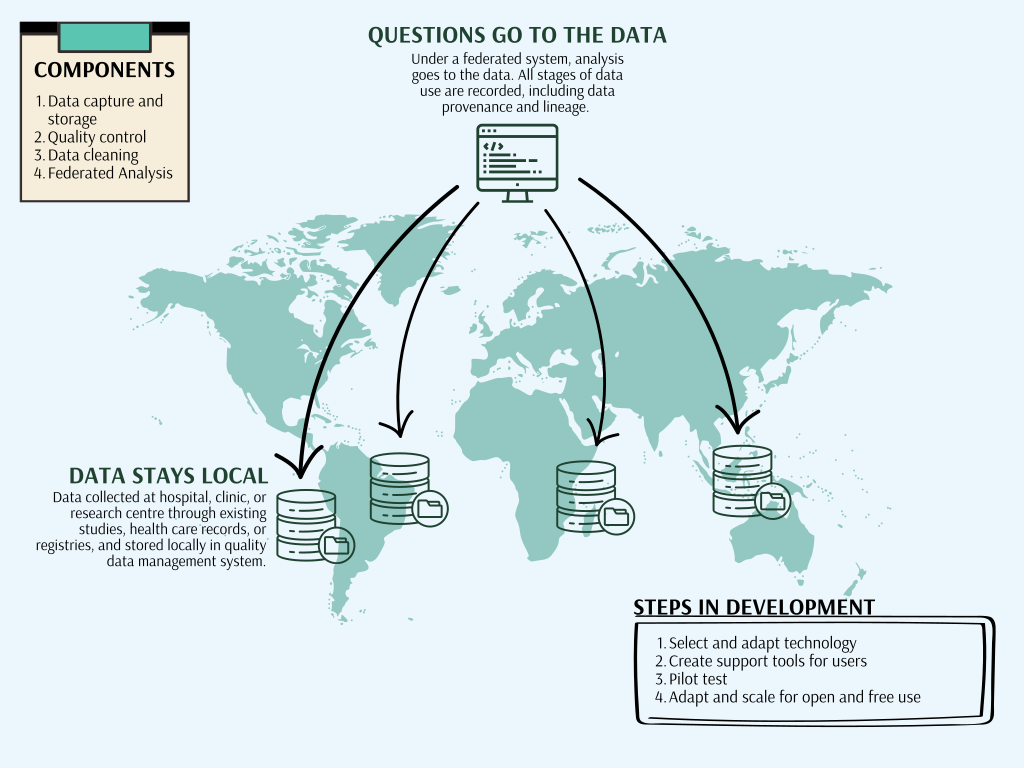
Data sovereignty is not a peripheral issue; it is central to creating a more just, capable and safer global research ecosystem. Federated analysis provides a mechanism for data sovereignty, allowing collaboration without extraction and ensuring that those closest to the data can lead and own their discovery and science. A global collaborative effort is needed to assess which technologies, systems, and resources are required, what exists, and where the gaps lie.
Global Task Force on Data Sovereignty
The Global Health Network has set up a Global Task Force on Data Sovereignty and Federated Analysis, convening experts from organisations worldwide who experience this issue, or can bring their expertise and comprise researchers, data scientists and digital technologists, working together to deliver this goal. This Task Force aims to:
- Define and articulate the case for data sovereignty as a foundation for equity, capacity, and security in global research, producing a Call to Action.
- Scope, test, and evaluate existing systems and technologies, including open federated platforms, governance frameworks, and interoperability models.
- Run use case pilots through TGHN’s extensive global network, embedding “studies within studies” to demonstrate feasibility and scalability in real-world research.
- Develop a practical Toolkit and Dashboard, powered by algorithms that guide research teams through the options and tools suited to their specific data type, study design, and analytic needs.
- Roll out globally through TGHN’s digital platform, enabling countries, research centres, and networks to implement sovereign, federated data science systems appropriate to their settings.